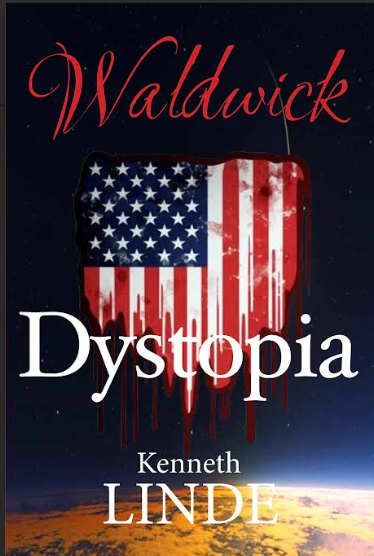
A sweeping, ambitious political science-fiction novel.
Moving from a quiet Wisconsin farmhouse to the domed megacities of 2525, Linde traces the ripple effect of personal choices, corporate greed, and political apathy in the latest installment of the Waldwick series. The story begins with the intimate deathbed reflections of George Terrill—a wealthy philanthropist reckoning with lost loves, fractured children, and the slow corrosion of American democracy—and ends five centuries later in a world scorched by climate collapse and ruled by authoritarian elites.
The novel begins in a realistic present and ends in speculative apocalypse, yet the bridge between those worlds is not technology but human emotion. George narrates the opening chapters with the weary clarity of a man who has loved, betrayed, and built empires. His memories of two very different marriages—Amy, the passionate first love who leaves him, and Megan, the steady partner of his later years—unfold alongside sketches of their children: Melia, self-exiled and elusive; “V,” a gentle son who enters the Senate; and Derrick, whose charm hardens into a hunger for power that hollows out democracy. Through George’s eyes, Derrick’s rise from family heir to global shipping magnate becomes a parable of how wealth and influence can purchase laws, control media, and quietly turn a republic into a corporate state. Other narrators complicate the portrait, particularly Amelia’s reflections on being biracial, bipolar, and bisexual. As the narrative vaults five hundred years forward, with the personal collapsing into the planetary, rising seas, runaway population growth, and political inertia create a world of flooded coastlines, collapsed ecosystems, and authoritarian rule. Humanity survives inside climate-controlled domes, genetically engineered for heat resistance, while love and empathy give way to rationing and state control.
By pairing intimate family regrets with sweeping environmental and political forecasts, Linde turns private drama into a warning of collective consequence. The book is less a manifesto than a mirror, asking readers to consider how today’s personal and political choices might echo across centuries—until love, freedom, and even the planet itself are memories preserved only in stories. Fans of Kim Stanley Robinson’s The Ministry for the Future and Emily St. John Mandel’s Station Eleven will be drawn to the novel’s blend of near-future realism, intimate human drama, and sweeping planetary stakes.
A quiet meditation on love and mortality that expands into a warning about democracy’s fall and Earth’s decline. A winner.
Coming soon

