Perceptive, moving, and quietly powerful.
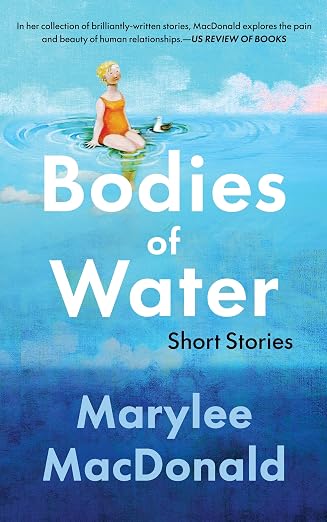
MacDonald’s latest book explores the myriad ways ordinary people find themselves standing at the edge of change. Across fourteen stories linked by the presence of water, the collection examines grief, family, friendship, aging, and the difficult choices that shape a life. The collection opens with “Drought,” a story set at Lake Powell, where marina worker Fernando Romero struggles with depression, his father’s advancing leukemia, and uncertainty about his future. When he discovers a submerged dining table; an art installation hidden beneath the lake’s surface, the image becomes a catalyst for self-recognition. The table, complete with chairs and place settings, reflects the life he fears he is trapped in. Rather than building toward a dramatic revelation, the story carefully traces Fernando’s growing understanding that he must choose his own future. His decision to pursue photography feels both modest and profound, precisely because MacDonald grounds it in the realities of work, family obligation, and economic insecurity.
That same attentiveness shapes “Some Were Rabbits,” in which Suellen Biggs, a struggling single mother training to become an ESL teacher, befriends three Bosnian refugees working as painters. What begins as an improvised English lesson gradually becomes an exploration of displacement, resilience, and the unexpected connections formed between strangers. MacDonald avoids easy sentimentality; neither Suellen nor the refugees are reduced to symbols. Instead, they emerge as fully realized people carrying disappointments, regrets, and hopes into a new chapter of life.
Elsewhere, an elderly hurricane survivor becomes convinced that an ark can help rebuild her shattered community; a phlebotomist struggles to end a failing relationship; an offshore oil-rig worker confronts difficult questions about family while trapped by fog; and long-married couples revisit decades of misunderstandings and compromises. The stories range widely in setting, from Arizona reservoirs to sacred rivers, harbors, and coastal communities, but remain unified by their fascination with the moments when people must decide whether to hold on, let go, or begin again. MacDonald’s prose is clear, observant, and quietly confident. She trusts detail over melodrama and character over spectacle. Water functions not as a heavy-handed symbol but as a recurring presence that shapes the lives of the people who live beside it. Like the collection itself, it can nourish, divide, conceal, reveal, and transform.
A thoughtful, deeply humane collection that finds extraordinary emotional depth in the lives of ordinary people. Lovers of Olive Kitteridge by Elizabeth Strout and A Manual for Cleaning Women by Lucia Berlin will find much to admire here.
***
Pub date November 3, 2026
Grand Canyon Press
ISBN 978-1963361179
Price $2.00 Kindle edition

